Poetry of Deeds (2025)
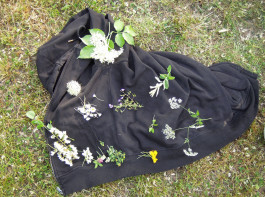
Herbs and flowers on sweater
N52.603522, E13.397207
24.4.25
"As we know, consumer society reduces art to a range of consumable products. This vulgarizing tendency accelerates degeneration but by the same token improves the prospects of supersession. That communication so urgently sought by the artist is jammed and banned even in the simplest relationships of everyday life. So true is this that the search for new forms of communication, far from being the preserve of painters and poets, is now part of a collective effort. This is the end of the old specialization of art. There are no more artists because everyone is an artist. The work of art of the future will be the construction of a passionate life.
The object created is less important than the process that engenders it, the act of creating. What makes artists artists is their creativity, not art galleries. Unfortunately, artists rarely recognize themselves as creators: for the most part they play to the public, showing off. The contemplative attitude towards art was the first stone thrown at the creators. They encouraged this attitude in the first place, but today it is their undoing, for it amounts to no more than an obligation to consume, reflecting the crassest of economic imperatives. Which is why there is no longer any such thing as a work of art in the classical sense of the word. Nor can there be such a thing— and so much the better. Poetry resides elsewhere: in deeds, in the events we bring about. The poetry of deeds, formerly always treated as marginal, now stands at the centre of everyone’s concerns, at the centre of everyday life— a sphere which in fact it never left.
True poetry cares nothing for poems. [...]
Poetry is always somewhere. If it leaves the realm of the arts, it is all the easier to see that it belongs first and foremost in action, in a way of living and in the search for a way of living. Everywhere repressed, this poetry springs up everywhere. Brutally put down, it is reborn in violence. It consecrates riots, embraces rebellions and animates all great revolutionary carnivals until the bureaucrats place it under house arrest in their hagiographical culture."
(Raoul Vaneigem, The Revolution of Everyday Life)